
28 years of decay silence
Born from an intuitive approach to extreme music, noise, and experimentation, the project has developed its own language over the years, marked by distortion, aggressiveness, repetition, contrast, and the use of the voice as a central element of its sound identity.
Its music maintains roots in grindcore and other forms of extreme music, but has never remained limited to a specific classification. Elements of industrial metal, noise, and sound experimentation came to coexist within a repertoire that can alternate between short, violent compositions, denser structures, industrial atmospheres, and works built around texture and resonance.
This freedom also defines Atomic Bomb's relationship with its own history. Material originating from different periods can return, be reorganized, or acquire new meaning, while new compositions continue to expand the project's vocabulary. The past does not function as a finished phase: it remains available as part of the present music.
The voice occupies a particularly important place in this identity. From the extreme registers associated with Atomic Bomb since its early years to more recent vocal explorations, it functions not only as a vehicle for lyrics, but as sound matter — capable of carrying rhythm, weight, texture, noise, and resonance.
Despite changes since 1998, one characteristic remains constant: Atomic Bomb does not seek to fit its music into a fixed formula. Each release can explore a different direction without abandoning the identity that runs through the project.
The result is a body of work that remains deliberately difficult to reduce to a single genre: extreme, experimental, abrasive, and in permanent transformation.
Atomic Bomb is not a band in the conventional sense. It is an individual and continuous musical project, created and led by Rafael Marques Elias since 1998.
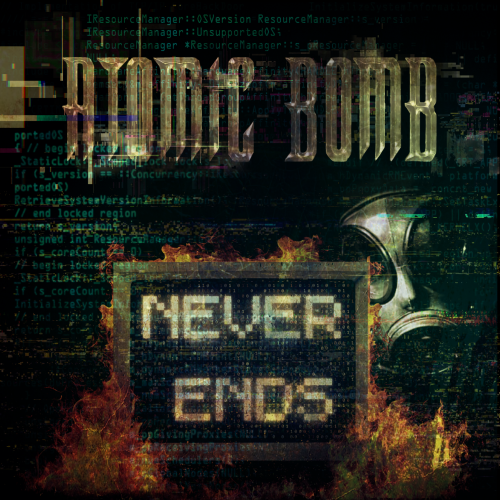
Never Ends.
You Can't Stop The Bomb
The survival of a project started by a 17‑year‑old in 1998 — with no support, no money, and no audience — should have been impossible.
It moved from dial-up connections to Wi-Fi, through corrupted media files, lost flash drives, and hardware failures. Yet the recordings were never lost. Against all logic, and even against the creator’s decision to terminate it, Atomic Bomb remains more alive than ever.
It exists outside the control of others’ wishes or opinions, and refuses to die.
This is the story. No fiction. No mythology. No delusion. Only facts — and the continuity of an entity that has survived for nearly three decades because it was never meant to disappear.
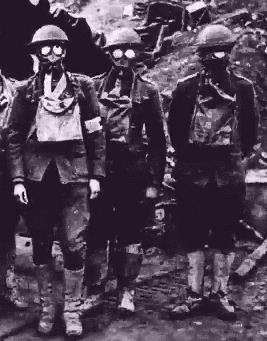
The three soldiers from 1916
The image of the three soldiers used throughout Atomic Bomb has been part of the project since its creation in 1998. It was taken from a printed encyclopedia, chosen not for historical accuracy or ideological meaning, but simply because it carried a weight that matched the atmosphere of the project. The photograph stood out immediately: unlike the typical sepia‑toned, high‑brightness images of World War I, this one was unusually dark, almost blue‑black, with low clarity and a somber palette. It looked more like a shadow than a record. No edits were made — the image appeared exactly as it was printed. At the time, the creator believed it was a World War II photograph. There was no information about nationality, allegiance, or context. The image was used purely for its tone, not for its origin. When the original Atomic Bomb files were lost in the 2000s, the image was lost with them — and when the archive resurfaced unexpectedly years later, the same unedited 1998 scan was among the recovered material.
Only in 2026 was the true origin identified: the soldiers belonged to the British–American side of World War I. This discovery came decades after the image had already become inseparable from the project.
Atomic Bomb does not represent nations, governments, ideologies, or political positions. The soldiers are not symbols of patriotism or allegiance. Their presence reflects something else entirely: the condition of individuals caught inside an industrialized war, masked, anonymized, and transformed into extensions of a system larger than themselves They are the embodiment of a condition: men trapped inside an industrialized war, surviving in toxic environments, wearing masks that erase individuality and transform them into instruments of a system larger than themselves.
Their appearance in the project was never a deliberate choice of side. It was one of many elements that emerged in a way that felt less like selection and more like inevitability. Atomic Bomb does not belong to any country. It represents a force without borders, without ideology, and without national identity.
ABRAMUS ID: 11035291 / IPI: I0076018772
CAE: 1343163183 / IPN: 11643350