
Official Realeses
After nearly 30 years of persistence and resistance, Atomic Bomb has finally begun the process of distributing its music on a professional level and released two albums; the EP Never Ends premiered on March 3rd on various music streaming platforms. The album is a compilation of almost three decades worths of Industrial Subversion, Grindcore, and atonal experimentation (UPC: 5063916390042). Soon after, On March, 15th, Atomic Bomb successfully challenged the algorithmic censorship (after an unusually long wait) and released YouDumb Is On Fire. The album is a hybrid of Old-School Grindcore, and Industrial Noise, combining vocals from the early 2000s and raw 2026 production. ZERO AI. 100% SYSTEMIC HATRED (UPC: 5063916530660).
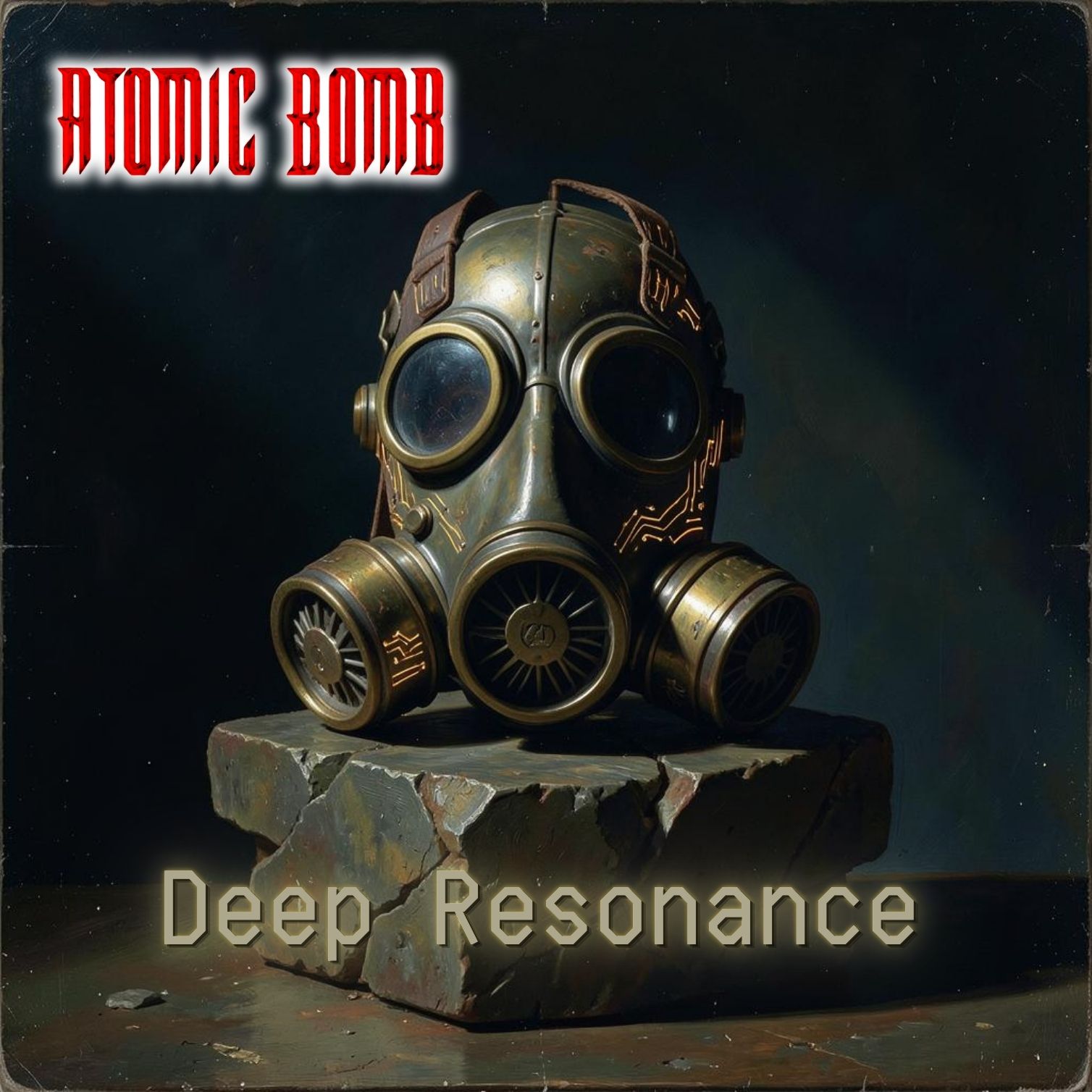
Back To Roots is the third album by Atomic Bomb, released on 2026‑04‑13. A raw and uncompromising record, it delivers a direct sonic assault fueled by noise, grind, and human imperfection. (UPC: 5063960273681).
Access the Atomic Bomb albums' smartlink, which are distributed globally by Ditto ($h1t) Music, and choose the platform you prefer. Strengthen the underground and help disseminate noiseshitalcoholicgrind throughout the entire world. To access smartlink click on the corresponding image.

World Wide Infection
The launch of World Wide Infection transcends the mere arrival of a new album; it is the pinnacle of a meticulously planned aesthetic ascent that took three decades to execute. This work articulates surgically the subversive rawness inherited from the project's foundation in 1998, with the absolute technical rigor, the sophistication of sound engineering, and the strategic vision that the year 2026 provided.
More than simply ending a creative hiatus that hung over the band, World Wide Infection represents the definitive strategic move for the repositioning of the Atomic Bomb project in the global market. It is a sonic manifesto that challenges complacency and uniformity.
There is a masterful duality that defines the work: the thematic "infection" – a lyrical and conceptual chaos that promises to destabilize structures – versus the sophistication of the delivery. The sonic aggression, which has always been Atomic Bomb's trademark, now possesses an undeniable signature maturity. This maturity is not synonymous with polish or surrender; on the contrary, it is a weapon that challenges the sanitation of the modern phonographic market. The technical basis for this is a high-performance hybrid production, which blends visceral analog saturation with cutting-edge digital precision. The result is a colossal and uncompromising sound that does not fit into the industry's predetermined boxes.
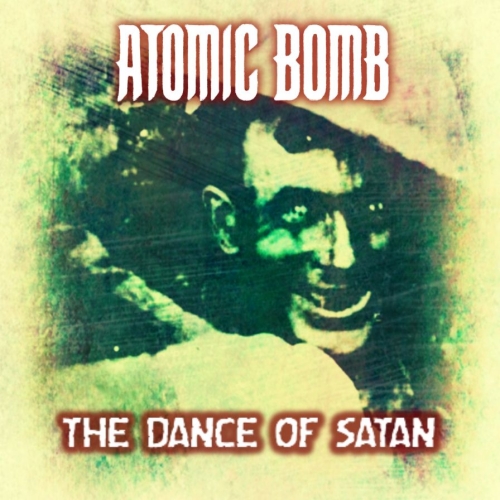
The Dance of Satan - EP
The Dance of Satan is an EP by Atomic Bomb built from original 1998 vocal recordings placed into newly reconstructed instrumental settings, creating a work that reconnects the band with the raw spirit of its earliest material while presenting it in a new form.
At the center of the release is the title track, whose reversed vocal, slow pacing, and ritualistic atmosphere make it feel less like a conventional song and more like an obscure invocation suspended between memory, ruin, and distortion.
Despite its name, the EP is not conceived as an endorsement of satanism.
Sonic violence over technological correction

Rejecting polish, trends, and platform logic, Atomic Bomb treats sound as a physical force rather than entertainment — an act of confrontation rather than communication.
The album does not attempt to overthrow anything; it corrupts by presence, moving like a silent agent that refuses to die. Here, destruction is not performed — it is executed. The sound does not imitate chaos — it controls it. Irony is not decoration — it is a weapon. Each track acts as a maneuver: advance, withdrawal, misdirection, sabotage, noise as ammunition. Atomic Bomb persists because it was never given the option to stop. The album Back To Roots represents a decisive rupture: no nostalgia, no refinement, no negotiation.
Cornering The Algorithms
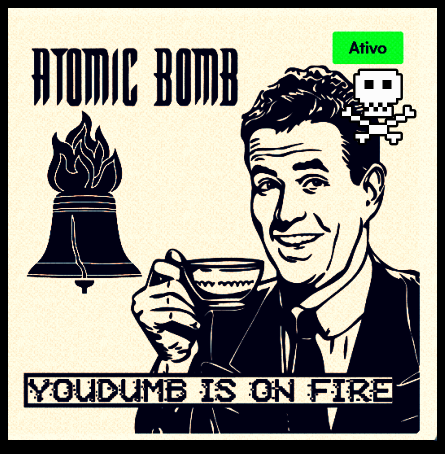
YouDumb Is On Fire is one of those rare albums that isn’t born simply as music, but as an experiment — a confrontation, a statement, and a test of how far the algorithmic world can be pushed before it cracks. It doesn’t ask for permission, it doesn’t apologize, and it refuses to fit into any sanitized digital mold. It exists to prove a point: the underground still knows how to make the machine choke.
It feels like the artist spent decades watching the digital world become increasingly controlled, polished, and predictable, only to come back with a record designed to challenge exactly that. YouDumb Is On Fire isn’t just an album. It’s a document. A provocation. An experiment in resistance.
Worldwide Infection: The Start

Never Ends marks the professional rise of Atomic Bomb — the moment the territory was claimed. The EP brings together material from different eras: “Damned Abecedary” from the early 2000s, and two tracks from the 2019 Rio phase: "Brain In The Dope" and “Suco de Macaco,” originally a Hellthoven track, was included intentionally. At the time, Hellthoven didn’t yet have its own distributor profile, so the track entered under Atomic Bomb. This EP is the zero point — the line in the sand where the project reasserted its existence.
Every track was forged through human error, utilizing obsolete hardware, plastic microphones, and manual editing via Audacity. The EP features recovered archives from corrupted hard drives and forgotten recording sessions spanning nearly three decades of systematic sonic failure (1998–2019)